Projectmanagement
From ideas to predictable progress
As an entrepreneur, your world is full of moving pieces:
- Client work that keeps the business alive
- New offers, products, or services you’d like to launch
- Internal improvements that would make everything run smoother
- Marketing campaigns, collaborations, and experiments you’d love to try
None of these are “just tasks”. They are projects.
Projects are where strategy becomes reality. And the difference between businesses that move forward consistently and those that stay stuck in good intentions is rarely about talent or ideas. It’s almost always about the same thing:
How well you manage your projects.
One simple idea captures this beautifully:
“Nothing is particularly hard if you divide it into small enough tasks.” – Henry Ford
Project management is taking that principle seriously and turning it into the way you actually work every day
What Project Management really is - in simple language
When I talk about project management, I don’t mean complex frameworks, heavy Gantt charts, or certification-level jargon.
I mean a practical way to move a project from idea to done.
At its core, project management is:
- Deciding clearly what you’re trying to achieve
- Breaking that outcome into small, concrete tasks
- Organizing those tasks in a logical order
- Making sure the right people do the right work at the right time
- Regularly checking progress and adjusting when reality doesn’t match the plan
This last one is a major important one that a lot of people forget when doing planning. It’s a living document, it’s alive and requires flexibility. But other than that, that’s it.
Good project management is not about perfection. It’s about having a simple, reliable way to move important work forward.
Why Project Management matters
Whether you’re a solopreneur or you leading a team, your reality probably looks something like this:
- You juggle multiple projects at the same time
- You switch constantly between strategy, delivery, and operations
- You depend on other people: freelancers, partners, or team members
Without solid project management, three patterns show up again and again:
Context switching kills your focus – You jump between emails, ideas, and tools. Everything feels urgent, nothing feels finished.
Projects drag on forever – You start with energy, but after a few weeks the momentum fades. The project never officially dies, but it never fully lands either.
Everyone is busy, but not always on the right things – Work is happening, but you lack a clear overview of who is doing what, by when, and why.
If you think in terms of something like the BI Triangle – where elements like product, marketing, sales, and systems all need to work together – project management is part of the foundation. It’s how all those pieces become coordinated action instead of isolated efforts.
Good project management doesn’t remove the chaos of entrepreneurship. But it channels it:
- You know what is on your plate and what can wait
- You can see which projects actually matter right now
- You can say “not now” with confidence, instead of “maybe later” forever
In short: project management turns ideas into predictable progress.
The Core Building Blocks of Project Management
1. Clear Outcomes
Every project starts with a basic question: What does “done” look like?
If you can’t describe the outcome in a few clear sentences, you’re not ready to plan.
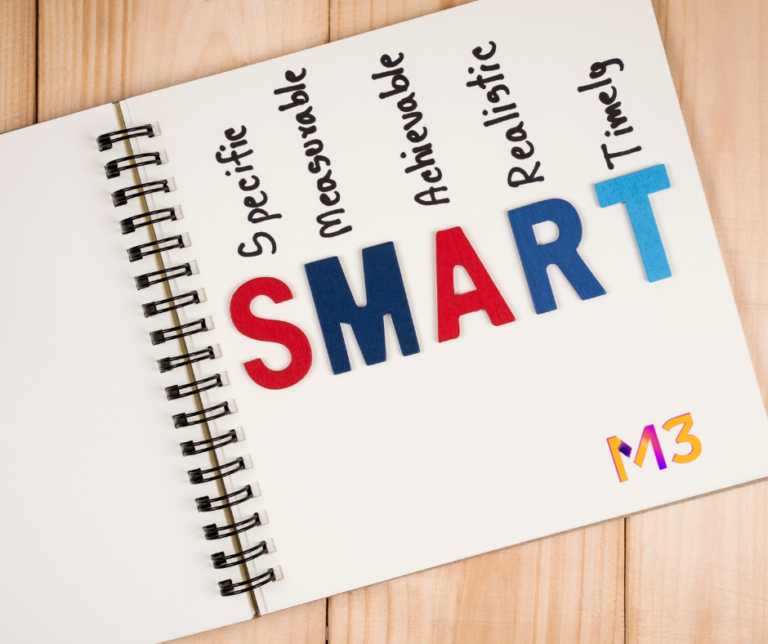
A good outcome is just like goal setting: SMART
- Specific – Don’t go for vague descriptions, be clear in detail.
- Measurable – What does done actually mean?
- Acceptable – The people involved need to be on the same page as you.
- Realistic – No wishful thinking allowed
- Time – you can clearly say yes or no: it’s done.
2. Breaking Work into Small Tasks
Once the outcome is clear, you break it down. This is where Henry Ford’s principle becomes practical.
Instead of one big, heavy item like “Redesign website”, you get tasks such as:
- Define target audience and core message
- Map current pages and decide what stays or goes
- Draft new homepage copy
- Design wireframes
- Implement in the CMS
- Test on mobile and desktop
- Plan the launch announcement
Each of these can be broken down further until they are small enough to:
- Be done in one focused work session
- Be clearly assigned to one person
- Have a realistic due date
If a task feels vague or heavy, it’s usually a sign: break it down further.
3. Prioritization and Sequencing
Not every task is equally important. Not every task should be done first.
Good project management means:
- Identifying critical path tasks – the work that blocks everything else if it gets delayed
- Deciding what can run in parallel and what must wait
- Making conscious choices about scope when time and energy are limited
Without this, you end up with a long list of tasks that all feel equally urgent and equally unclear.
4. Ownership and Expectations
A task without a clear owner is a task that probably won’t get done.
Each important task should answer:
- Who is responsible?
- By when should it be done?
- What does a good result look like?
This is where management and leadership meet: you’re not only structuring the work, you’re giving people (including yourself) a fair chance to succeed.

5. Communication and Collaboration
Projects rarely fail because of one missing feature. They usually fail because of .
Effective project management creates a shared picture:
- Everyone sees the same overview of tasks and deadlines
- Discussions happen around concrete work instead of vague ideas
- Decisions and changes are documented instead of buried in someone’s inbox
- And with the overview and time framing, you can easily stay on top and ask the right questions at the right time.
6. Tracking, Evaluating, and Learning
No plan survives reality unchanged. That’s why evaluation is part of the system, not an afterthought.
You regularly:
- Review progress: What’s done, what’s stuck, what’s next?
- Adjust priorities based on new information
- Capture lessons learned so the next project runs smoother
This connects directly to the Evaluating part of models like POLE (Planning, Organizing, Leading, Evaluating). Each project becomes an opportunity to improve not only your results, but also your way of working.
A Practical Example: One Marketing Campaign, Many Moving Parts
To make this more concrete, imagine you run a business where you work with themes per campaign.
One campaign might include:
- A long-form blog as the core content piece
- An email sequence that drives subscribers toward a specific offer
- A social media strategy with reels, posts and stories
- A product launch or specific promotion linked to the theme
Different people may touch different parts of this campaign: copywriters, designers, video editors, someone managing the launch, and maybe you as the founder coordinating it all.
The blog needs to be ready first, because:
- Social content pulls key ideas, hooks, and visuals from the blog
- Emails build on the same story and objections
- The launch message needs a clear, consistent foundation
Without project management, this quickly becomes messy:
- Someone starts on social assets before the core message is final
- Emails are written without a shared structure
- Timelines slip because dependencies weren’t clear
With solid project management, you:
- Define the outcome of the campaign up front
- Map all the deliverables and break them into tasks
- Make dependencies explicit (blog first, then socials and emails)
- Assign owners and dates
- Keep communication attached to the work, not scattered across tools
If you run an agency or work as a partner inside your clients’ businesses, this becomes even more important. You often:
- Collaborate with multiple partners across different projects
- Need a uniform way of working so everyone understands the structure
- Work deep inside the client’s company, connecting strategy, marketing, sales, and product development
In that context, a good project management system is what gives you a real overview and lets you quickly find what you need across all those parallel initiatives.
From Spreadsheets to Systems: Why You Need a Real Project Management Tool
You can manage projects with Post-its, email threads, or a single spreadsheet. Many businesses start that way. Let’s be honest, didn’t we all?
But as soon as you:
- Run multiple projects at the same time
- Work with a team, freelancers, or external partners
- Want to keep clients or stakeholders in the loop
…those improvised systems start to break.
Typical symptoms:
- No single, reliable overview of all ongoing projects
- Information spread across tools – tasks in one place, files somewhere else, decisions in chat
- Time lost searching instead of executing
- The feeling that work “slips through the cracks”
That’s where a dedicated project management tool becomes essential.
A good tool helps you:
- Keep all tasks, deadlines, and responsibilities in one structured place
- Visualize work in different ways (lists, boards, timelines) depending on what you need
- Connect planning, communication, and evaluation instead of keeping them separate
- Build repeatable structures you can reuse for similar projects
Tools like ClickUp are built exactly for this: turning your management principles into a living, breathing system you and your team can actually work in.
Whats the next step?
If you recognize yourself in this – too many projects in your head, deadlines that surprise you, a team that’s busy but not always aligned – then you don’t necessary need more effort. You need a better system.
Project management is the discipline. A tool like ClickUp is how you make that discipline tangible:
- One place where your projects live
- One structure your team can rely on
- One system that connects ideas, tasks, communication, and evaluation
The next logical step is simple: find a software that can become the backbone of your project management and support the way you already think about your business.